


What Are Harmonics? A Simple Explanation

Electricity that flows through our homes, offices, and factories ideally follows a perfect sine wave at 50 Hz in India. In a healthy electrical system, voltage and current waveforms are smooth and consistent.
However, modern electrical equipment such as computers, LED lighting, chargers, variable speed drives, and UPS systems can distort this waveform. These distortions introduce additional frequencies into the system known as harmonics.
Understanding harmonics is the first step toward maintaining good power quality, efficient operation of electrical equipment, and preventing long-term electrical problems.
The Basic Idea of Harmonics
In simple terms, harmonics are unwanted frequencies that ride along with the normal electrical frequency.
In India, the normal frequency of the power system is:
Fundamental Frequency = 50 Hz
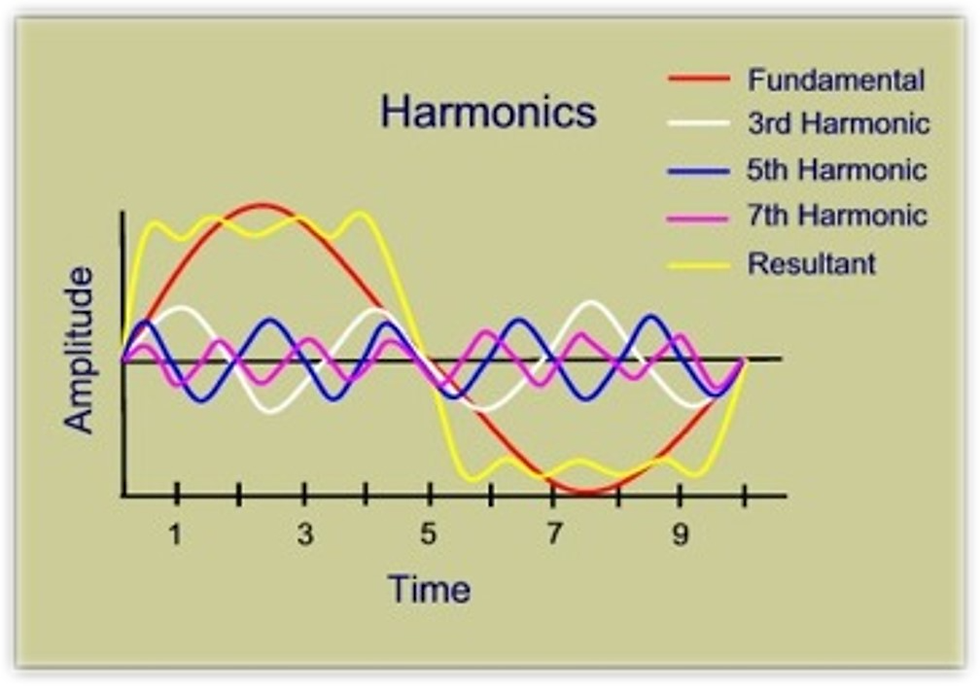
When harmonics are present, additional frequencies appear such as:
3rd harmonic → 150 Hz
5th harmonic → 250 Hz
7th harmonic → 350 Hz
These frequencies distort the original sine wave and create what is called waveform distortion.
When this happens, electrical systems may experience additional heating, losses, and power quality problems.

A Simple Real-Life Comparison
To understand harmonics easily, imagine traffic on a highway.
Normal Situation
A highway with smooth traffic flow is similar to a clean sine wave in electricity.Vehicles move at a steady speed without interruption.
When Disturbances Occur
Now imagine:
trucks moving slowly
vehicles changing lanes randomly
sudden braking
This creates irregular traffic flow.
Similarly, electrical devices that draw current in pulses instead of smooth flow disturb the electrical waveform. These disturbances are what we call harmonics.
Understanding the Waveform
In an ideal electrical system:
Voltage waveform → smooth sine wave
Current waveform → smooth sine wave
When harmonics appear:
Current waveform becomes distorted
Voltage waveform may also get distorted
Electrical efficiency decreases
The degree of distortion is measured using a parameter called:
Total Harmonic Distortion (THD)
THD tells us how much distortion exists compared to the fundamental waveform.
Why Harmonics Are Increasing Today
Harmonics were not a major issue in older electrical systems because most loads were linear loads, such as:
incandescent lamps
induction motors
resistive heaters
Modern electrical systems now use many non-linear loads, including:
LED lighting systems
mobile and laptop chargers
SMPS power supplies
UPS systems
variable frequency drives (VFDs)
computer servers and IT equipment
These devices draw current in short pulses rather than smooth waves, which introduces harmonics into the system.
As a result, harmonic levels in modern buildings and industries are steadily increasing.
Wrapping Up
Harmonics are unwanted electrical frequencies that distort the normal sine wave in a power system. They are mainly caused by modern electronic equipment and non-linear loads.
While small levels of harmonics are unavoidable, excessive harmonics can lead to serious electrical problems, efficiency loss, and equipment damage.
In the next blog, we will explore the different types of harmonics and how they appear in electrical systems.


Comments