


MCCB vs ACB Switchgears Understanding Key Differences Applications and Cost Benefits

Electrical systems rely heavily on switchgear devices to protect circuits and ensure safe operation. Among the most common switchgears are Molded Case Circuit Breakers (MCCB) and Air Circuit Breakers (ACB). Choosing the right device impacts system reliability, safety, and cost. This post compares MCCB and ACB switchgears, explaining their differences, applications, advantages, and limitations. It also explores cost benefits when using MCCB combined with contactors instead of ACB for systems above 400A, supported by real-world examples.
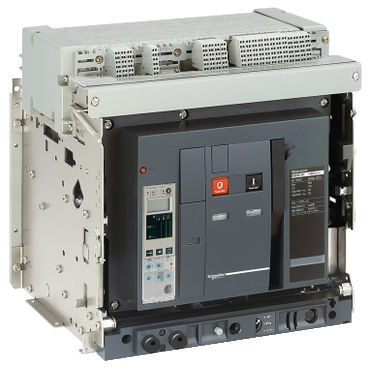
Key Differences Between MCCB and ACB Switchgears
MCCB and ACB serve similar purposes but differ significantly in design, capacity, and operation.
Design and Construction
MCCBs are compact, molded case devices designed for low to medium current ratings, typically up to 1250A. They use thermal-magnetic trip units for protection and are suitable for panel-mounted applications.
ACBs are larger, air-insulated breakers designed for high current ratings, often exceeding 800A. They have adjustable trip settings and advanced protection features, including electronic trip units.
Interrupting Capacity
MCCBs generally have lower interrupting capacities, suitable for smaller circuits. ACBs handle higher fault currents, making them ideal for main power distribution and industrial applications.
Operation and Control
MCCBs are manually operated or have simple electrical trip mechanisms. ACBs offer motorized operation, remote control, and integration with automation systems.
Maintenance and Lifespan
MCCBs require less maintenance but have shorter lifespans under heavy use. ACBs are designed for frequent operation and have replaceable parts, extending service life.
Applications of MCCB and ACB
Understanding where each switchgear fits best helps optimize system design.
MCCB Applications
- Protection of branch circuits in commercial and residential buildings
- Motor protection in small to medium industrial setups
- Control panels and distribution boards with current ratings below 1000A
ACB Applications
- Main incoming feeders in industrial plants and large commercial buildings
- Power distribution in substations and switchyards
- Systems requiring high fault current interruption and advanced protection
Advantages and Limitations
Each switchgear type offers benefits and faces constraints.
MCCB Advantages
Compact size saves panel space
Lower initial cost for low to medium current applications
Simple installation and operation
Suitable for retrofit and smaller systems
MCCB Limitations
Limited interrupting capacity
Less suitable for high current or high fault level systems
Fewer advanced protection features
ACB Advantages
High interrupting capacity for large fault currents
Adjustable and precise protection settings
Motorized operation and remote control capability
Longer service life with replaceable components
ACB Limitations
Larger size requires more panel space
Higher upfront cost
More complex installation and maintenance
C
Cost Benefits of Using MCCB Combined with a Contactor vs ACB for Systems Below 400A
For systems below 400A, using a combination of MCCBs and contactors is a cost-effective solution. In contrast, for systems above 400A, ACBs become the preferred choice due to their higher capacity and advanced protection features.
Cost Comparison
ACBs require a higher initial investment, which includes the breaker, control gear, and installation costs. In contrast, MCCBs paired with contactors significantly reduce equipment expenses and simplify wiring. Contactors are designed for frequent switching, while MCCBs provide essential overload and short circuit protection.
Operational Efficiency
This combination allows for flexible control and protection without the complexity associated with ACBs. It is particularly suited for applications where the switching frequency is high but fault levels remain moderate.
Example Case
A manufacturing plant upgraded its motor control center from ACBs to MCCBs with contactors for 300A circuits. This change resulted in a 30% reduction in equipment costs and simplified maintenance processes, while still ensuring safety and reliability in meeting all protection requirements.
Limitations
This approach may not be suitable for systems with extremely high fault currents or where advanced protection mechanisms are mandatory. Careful coordination and a thorough system study are essential for successful implementation.
Real-World Examples and Case Studies
Case Study 1: Commercial Building Distribution
A commercial office building used MCCBs for branch circuit protection up to 400A. For the main incoming feeder rated at 1200A, an ACB was installed to handle high fault currents and provide remote operation. This setup balanced cost and safety, ensuring reliable power distribution.
Case Study 2: Industrial Motor Control
An automotive assembly plant replaced ACBs with MCCBs combined with contactors for motor circuits rated at 400A. The plant reported a 25% reduction in capital expenditure and easier maintenance schedules. The system met all operational demands without compromising protection.
Case Study 3: Data Center Power Distribution
A data center required precise protection and fast fault clearing for its main power feeders. ACBs with electronic trip units were chosen for their advanced features and high interrupting capacity. MCCBs were used downstream for branch circuits, optimizing cost and performance.
Choosing between MCCB and ACB switchgears depends on system requirements, fault levels, and budget. MCCBs offer compactness and cost savings for low to medium currents, while ACBs provide robust protection for high current applications. Combining MCCBs with contactors can reduce costs for systems above 400A without sacrificing safety, given proper design and coordination.


Comments